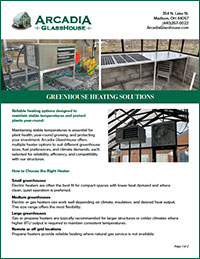
How to Heat a Greenhouse in Winter: Electric, Gas & Propane Options Explained
How to Heat a Greenhouse in Winter
Heating a greenhouse in winter allows you to grow year-round, protect plants from frost, and maintain stable growing conditions. The right greenhouse heating system prevents temperature swings and supports healthy plant growth.
Arcadia GlassHouse offers electric, gas, and propane greenhouse heating solutions designed to integrate seamlessly with our custom greenhouse structures.
Why Proper Greenhouse Heating Matters
Greenhouses lose heat quickly during cold nights and seasonal shifts. Without adequate heating, plants can suffer stress, slowed growth, and frost damage.
A properly sized greenhouse heater helps you:
- Maintain consistent daytime and nighttime temperatures
- Protect plants from freezing conditions
- Reduce plant stress and disease risk
- Improve overall energy efficiency
- Extend your growing season
Electric Greenhouse Heaters
Electric greenhouse heaters provide clean, quiet heat and require no venting. They are often the best choice for small to medium greenhouses.
Electric heating is ideal for:
- Compact greenhouse structures
- Mild to moderate winter climates
- Growers who prefer low maintenance systems
- Environments where natural gas is unavailable
Gas Greenhouse Heaters
Gas greenhouse heaters deliver higher heat output and faster temperature recovery. They are commonly used in larger greenhouses and colder climates.
Gas heating is best suited for:
- Large greenhouse structures
- Commercial growing operations
- Regions with extended winter seasons
- Situations requiring strong, consistent heat
Propane Greenhouse Heaters
Propane greenhouse heaters are often used where natural gas service is not available. They offer flexibility for rural and off-grid installations.
Propane heating works well for:
- Remote greenhouse locations
- Larger structures needing high heat output
- Backup or supplemental heating
How to Choose the Right Greenhouse Heater
The best greenhouse heater depends on the structure size, climate, and fuel availability.
- Greenhouse square footage
- Glazing type and insulation level
- Local winter temperatures
- Desired minimum growing temperature
- Access to electric, natural gas, or propane fuel
Factors That Affect Greenhouse Heating Requirements
Several factors determine how much heating your greenhouse requires during winter.
Greenhouse Size and Air Volume
Larger greenhouses require more heating capacity. Ceiling height and total air volume directly affect heat demand.
Glazing Performance
Insulated glass and multi-layer glazing reduce heat loss. Higher performing glazing improves energy efficiency and lowers heating requirements.
Insulation and Air Sealing
Air leaks around doors, vents, and framing increase heat loss. Proper sealing improves temperature stability and reduces operating costs.
Climate Conditions
Colder regions and windy environments increase heating demand. Greenhouses in northern climates require greater heating capacity.
Plant Requirements
Tropical plants need higher minimum temperatures. Cold tolerant plants require less heating support.
Air Circulation
Even heat distribution prevents temperature stratification and protects plants at all levels of the structure.
Frequently Asked Questions About Greenhouse Heating
What is the best way to heat a greenhouse in winter?
The best way to heat a greenhouse in winter is to install a properly sized electric, gas, or propane greenhouse heater based on structure size, insulation performance, and local climate conditions.
What size heater do I need for my greenhouse?
The size of your greenhouse heater depends on square footage, glazing type, insulation level, and the lowest expected outdoor winter temperatures.
Is electric or gas better for a greenhouse?
Electric greenhouse heaters are ideal for smaller structures and simple installation. Gas heaters provide higher heat output for larger or colder climate greenhouses.
How do you keep a greenhouse warm at night?
To keep a greenhouse warm at night, use a properly sized heating system, improve glazing performance, seal air gaps, and ensure adequate air circulation.
Can you grow plants year round in a heated greenhouse?
Yes. With proper insulation and a correctly sized greenhouse heating system, year round growing is possible in most climates.
Do greenhouse heaters require ventilation?
Electric heaters do not require venting. Gas and propane heaters may require appropriate ventilation depending on the installation.
Download the Greenhouse Heating Guide
Selecting a greenhouse heater involves more than choosing a fuel type. Our Greenhouse Heating Solutions Guide includes detailed configuration information and planning considerations.
Download the Greenhouse Heating Solutions Brochure